
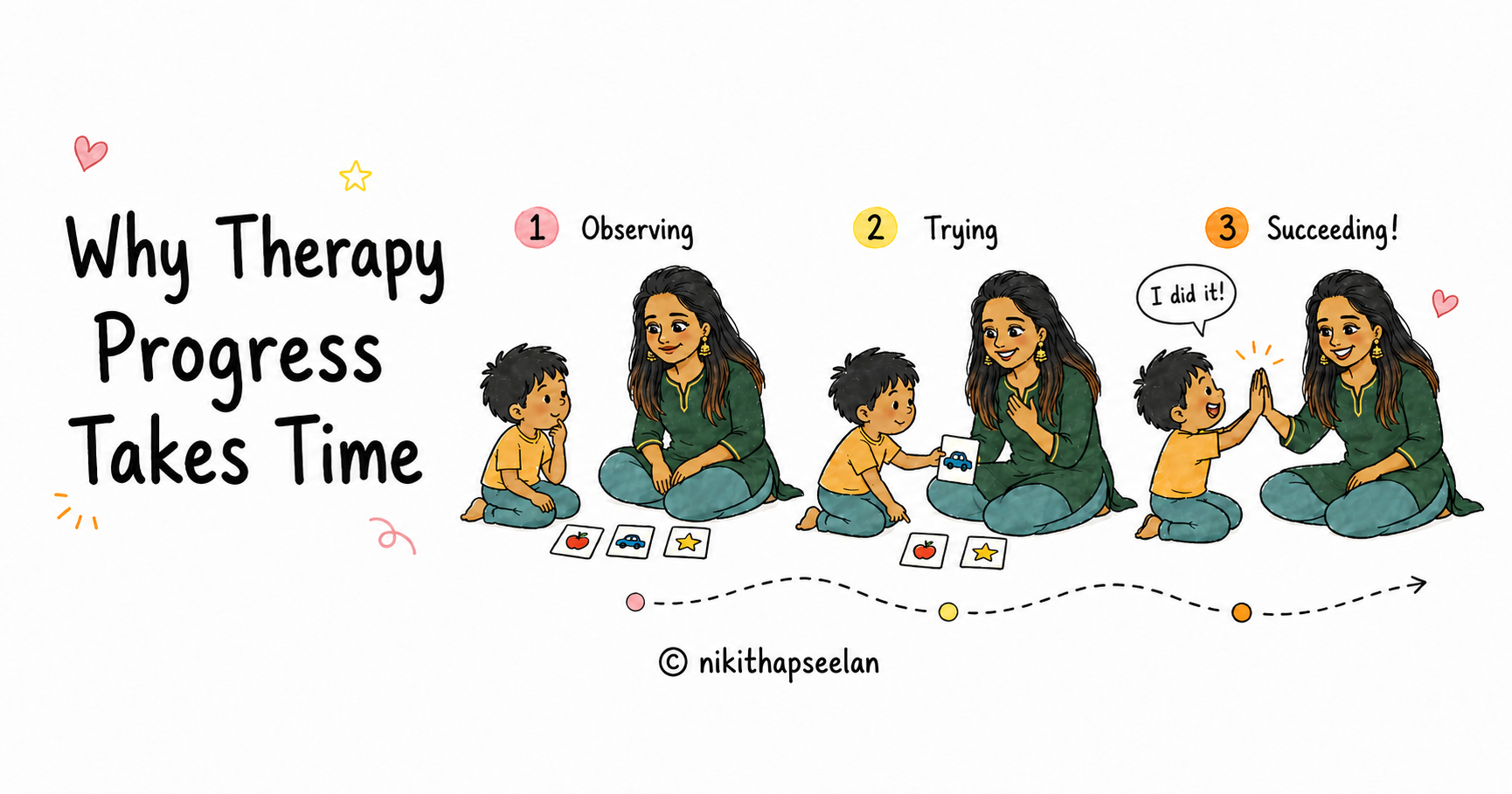
Why Therapy Progress Takes Time: What Parents Need to Know.
When parents begin therapy, one of the first questions they understandably ask is: “How long will it take to see progress?”
There is no single timeline that applies to every child. Therapy is not a quick fix or a race. Each child begins with different strengths, needs, learning styles and developmental experiences. Meaningful progress is built gradually through assessment, appropriate goals, repeated practice and support across everyday situations.
Progress is not always a straight line
Children may make noticeable progress during some weeks and appear slower during others. A child might demonstrate a new skill during therapy but need more time before using it independently at home, school or in unfamiliar situations.
This does not necessarily mean that therapy is not working. Learning a skill and using it naturally in everyday life are different stages of development.
What can affect the pace of progress?
1. The child’s individual needs
A child working on one speech sound may progress differently from a child who needs support with communication, attention, sensory regulation, motor planning, feeding or functional independence.
Children with multiple developmental needs may require an integrated approach involving speech therapy, occupational therapy, special education and family support.
2. The complexity of the goal
Some skills are easier to learn than others. Saying a sound during a structured activity is different from using it clearly in conversation. Naming an object is different from independently asking for it.
More complex skills often need to be built through several smaller steps.
3. Therapy frequency and intensity
The number and length of sessions should be planned according to the child’s needs and goals. More sessions do not automatically guarantee faster progress. The quality of intervention, the appropriateness of the goals and the child’s readiness to participate are equally important.
4. Consistency and everyday practice
Therapy does not end when the session finishes. Children benefit when suitable strategies are used naturally during play, meals, dressing, reading and other daily routines.
Home practice does not have to feel like extra schoolwork. Short, meaningful interactions repeated consistently can be more helpful than occasional long practice sessions.
5. Regulation, health and attendance
Sleep, illness, sensory needs, emotional regulation and changes in routine can affect how a child participates and learns. Regular attendance and communication between families and therapists help the team understand these changes and adjust the plan when needed.
Progress may appear in small ways first
Before a child reaches a larger goal, families may notice smaller changes such as:
- Better attention and participation
- Increased eye contact or shared engagement
- More attempts to communicate
- Improved understanding of instructions
- Using gestures, pictures, AAC or words more purposefully
- Better sitting tolerance and regulation
- Increased imitation
- More independence during daily routines
- Using a skill with different people or in different places
These smaller steps are important foundations for later communication, learning and independence.
How can parents support progress?
Parents are an essential part of the therapy team. You can help by:
- Understanding the current therapy goals
- Practising the recommended strategies during daily routines
- Sharing observations from home and school
- Sending short practice videos when requested
- Attending review meetings
- Asking questions when a goal or activity is unclear
- Celebrating effort and small improvements without pressuring the child
The aim is not to conduct a therapy session at home. It is to create natural opportunities for the child to use developing skills.
When should the therapy plan be reviewed?
Parents and therapists should regularly discuss what is changing, what remains difficult and whether the goals continue to be meaningful for the child.
A review may be needed when:
- The child’s needs or priorities have changed
- Goals are no longer suitable
- The family does not understand the therapy plan
- The child is consistently distressed during sessions
- There is no measurable change over a reasonable period
- Skills are appearing in therapy but not in everyday life
Reviewing a plan does not mean that anyone has failed. It helps ensure that intervention remains responsive and relevant.
The goal is meaningful progress—not rushed progress
Every child’s journey is different. Therapy should focus on skills that help the child communicate, participate, learn and become more independent.
Progress may take time, but small, consistent and meaningful changes matter.
If you have concerns about your child’s communication, feeding, sensory development, learning or independence, an individual assessment can help identify the most appropriate next steps.
Call or WhatsApp Word Speechology Learning Centre: +91 90306 84624
This article provides general educational information and does not replace an individual assessment or professional medical advice.